Reunite is a timeless piece that you’ll be wearing for many years to come. Decked with classic details – crew neck, set-in sleeves, crowd-pleasing cables – you will treasure this knit as much as you’ll enjoy knitting it. Reunite’s secret is the abundance of plain knit rows, which conspire to create a textured cable cardigan knitting pattern that’s also a relaxing project.
And if you’d prefer to make a sweater, you’re covered: hop over to the Unite sweater to see what you’ll get!
How the Reunite cardigan is constructed
Starting at the hem with a rib, this basket weave and cable cardigan features a classic set-in sleeve construction. Next, the Fronts, Back and Sleeves are knitted separately – making this a really portable project – before being seamed together.
Full photo and video tutorials are included to walk you through the finishing process for this sweater.
Lastly, the neckband stitches are then picked up and a simple garter stitch band is knitted on, followed by a garter stitch button and buttonhole band.
Yarn choices for the Reunite cable knit cardigan
The sample was knitted with Something to Knit with Aran. Unfortunately this yarn is now discontinued. However, any Aran yarn with a stocking stitch/stockinette tension of 18 sts x 24 rows to 10cm will be an excellent substitute. Please click on the Yarn Selection, Fibre, & Fabrication tab above for more details, visit YarnSub for help sourcing a specific yarn, and make sure you knit a test swatch!
See more reviews of the Reunite cardigan on Ravelry
More about the Reunite cardigan and the Something to Knit Together Winter Edition
This textured cable cardigan pattern is also part of the Something to Knit Together Winter Edition. Other pieces in this collection include the:
This five-piece collection was produced in collaboration with A-C Techniques. There are also some finished projects on Ravelry to inspire you – knitters have put their own twist on Unite!
Special Techniques for the Reunite cable knit cardigan pattern
- Joining shoulders with back stitch (photo and video tutorial)
- Setting in the sleevehead (photo and video tutorial)
- Right crossing cables
- Left crossing cables (optional)
- Picking up stitches (video tutorial)
You can also visit AC Techniques’ YouTube channel for more video tutorials, which also include help with finishing techniques. And you can contact me directly for pattern support.
Errata
In sections 9 and 14 of the pattern, it should say:
You now need to work straight until the (Left or Right) Front is 18 (18, 18, 20, 20, 22, 22, 24, 24, 26) rows shorter than the Back, to the point where your back neck and shoulder shaping started.
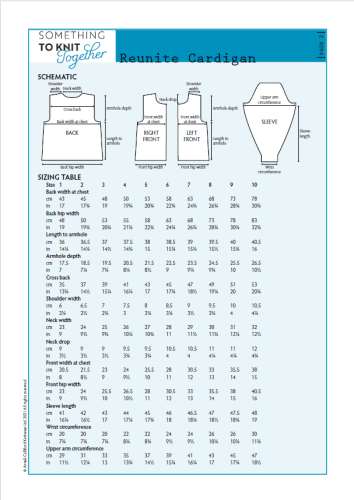
Sizing, Fit, & Schematic Information
Yarn Selection, Fibre, & Fabrication
The Reunite Cardigan relies on a balance of structural stability (to support the density of classic Aran cables) and tactile flexibility (to keep the basketweave sections comfortable and wearable). When selecting yarn for this classic layering cardigan, keep the following characteristics in mind:
Fibre Composition & Behaviour
- Protein Fibres (Wool, Alpaca, Blends): A 100% wool or wool-dominant blend (such as wool/alpaca) is ideal for preserving memory, elasticity, and structure across the cable panels and ribbed trims. Wool acts as a protective, grounding blanket for the body, keeping warmth localised without adding unnecessary bulk. Non-superwash wool will provide maximum cable pop and structural longevity.
- Cellulosic Fibres & Blends: If choosing a cotton, linen, or plant-based blend, expect the cardigan to have significantly increased drape and weight. Because plant fibres lack natural elasticity, the basketweave and cable details will lay flatter, and the length may stretch over time. If using a 50/50 protein/cellulosic blend, swatch thoroughly on a 20cm x 20cm scale to evaluate how the vertical weight affects your gauge before casting on. I also recommend hand sewing in some twill or non-stretch tape or binding to the back neck and shoulder seams to prevent the neck and shoulders stretching out over time due to the heavier weight of cellulosic fibres.
Yarn Weight & Meterage
Aran / Heavy Worsted weight. Always match your yarn selection by total meterage needed for your size rather than skein weight alone. Ensure your chosen yarn isn’t overly dense; a lofty yarn with trapped air will keep this intricate cable structure lightweight and comfortable on the shoulders.
Yarn Construction
A high-twist 3-ply or 4-ply yarn with crisp strand definition will make the Aran cable twists and basketweave texture pop with maximum clarity. Woollen-spun yarns will create a softer, more traditional heathered look, whilst worsted-spun yarns will emphasise the sharp geometric lines of the stitch pattern.
Pattern Support
After checking out, you’ll be emailed a link to download a digital PDF file of your chosen pattern(s), plus any separate fitting guides as appropriate. These will also be PDF files. You’ll also receive further tutorials, inspiration, and general guidance via email after purchase, so please keep an eye on your inbox.
If you also choose to create an account – you can do this at checkout OR by clicking on the avatar in the top right-hand corner – your purchases will be stored in your account area for safekeeping. I also recommend downloading all files immediately and saving them to your preferred computer or device so that you have a local copy.
You then have the option of either printing out the pattern or reading it from your mobile device – whichever suits you best. And if you get stuck along the way or have any constructive feedback to share, you can email me anytime. I’m always glad to hear from my community and see their interpretations of my patterns!
New to Natalie in Stitches knitting patterns? If you’re not ready to cast on or need a little more time to decide, I’ve created a worksheet especially for getting you settled with my designs. Download it here.